Using Snapchat in Math – Applying Similar Triangles

Did you see their face swap?  Did you post it to your story?

Snapchat seems to be the only thing students (and a growing number of adults) worry about most of the day.  Kids are constantly finding creative ways to make funny pictures and send them to friends.  Adults are constantly posting how great their vacation or night on the town is going.  Being the tech-curious person I am, I decided to develop a different way to use it in a math classroom.  Check it out.


Lesson: Applying Similar Triangles

Course: Honors Geometry with mostly freshman and a handful of sophomores

Lesson Objective: Determine the height of the school building using only a ruler and Snapchat.

Standard: ACT CCRS (G 603); CCSS (G.SRT.B.5)

Previous Knowledge: By the time I taught this lesson, we had discussed congruent figures and had discussed that corresponding sides of similar triangles have the same scale factor.  We had also discussed the congruence and similarity theorems.  Students had worked out problems and we more or less comfortable with problems like those below.
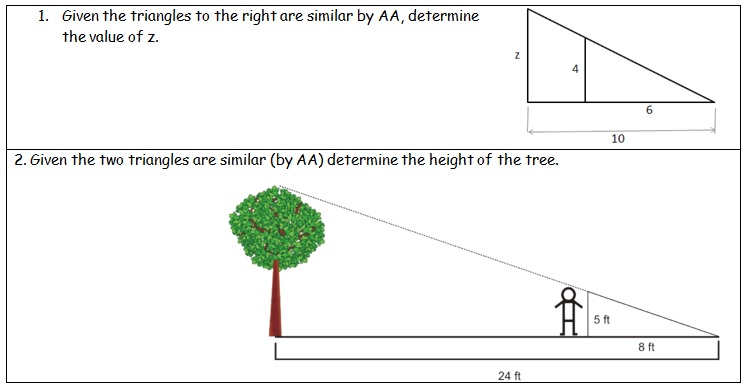
SnapChat Pre-lesson

Lesson: Ideally, I wanted to take the students outside to measure the height of the building, but it did not work out for whatever reason.  I ended up giving the students the assignment as an extra credit opportunity and asked them to find the height of their house or some other object that was at least two stories tall.  I handed out the following, then did my best to explain to students what I wanted them to do.  I also created this template for students to organize their thoughts and upload a picture of them in action.
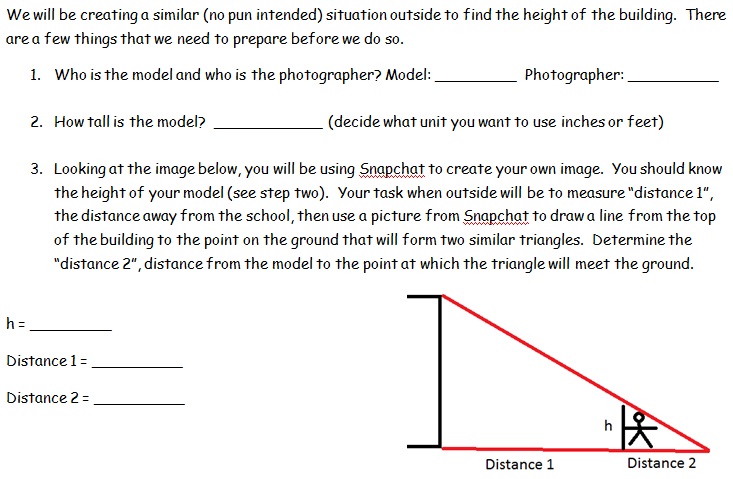
SnapChat Lesson

Results: Here are a few examples of student work.

Sample 1:

SnapChat 1I really liked this student’s work.  They seemed to understand the idea well.  I discussed with them to remember that he started a little below the ground (standing in the street).  Also, note this assignment may encourage to stand in the road for a pose.  Probably not the best…

Student’s Reflection:The only thing that can be improved is maybe try it in class too.”

Sample 2:  

SnapChat 2This student may have understood the general premise, but missed the importance of precision (at least in the drawing).

Student’s Reflection:We probably did it wrong. I thought it was kinda a cool project of how you can find the height of an object outside just by using snapchat and math. What can be improved for next time is showing an example of this project.”

Sample 3:

SnapChat 3We had covered many of those “if John has a 6ft shadow and the tree has a 15ft shadow…” problems and this student – along with others – believed they needed to use shadows to solve the problem.  Unlucky for them, they chose to do the project at sun-down.  Whoops.

Student Reflection: “It was nice to apply the concepts learned in class to real life situations. The most difficult part was trying to find where the shadow actually started and ended. Also, it was a challenge to get the whole picture in one entire frame. Next time, it would be better if we could do this kind of activity in school so that we can verify if we are doing it correctly.”


My Reflections

I really enjoyed the work that I got back from students.  I am curious if this was only a successful application because it was an extra credit assignment for honors students.  Most likely, it would need to be modeled or carefully explained if it was expected for all students of varying abilities to find success with it.

A question I have is whether the lesson could have been more or less effective with less specific direction.  I am a big fan of 3 Act lessons which leads students to ask the questions and determine what information is necessary to solve a problem.  Rather than giving them problems similar to the situation beforehand, could we somehow introduce the situation and have them draw the conclusions by themselves?  Even if we covered similar triangles deeply before the activity, maybe we could let students struggle with how the task could be completed with just Snapchat and a ruler.

Please let me know if you read this and have any suggestions!  I’d love to build it into an even more meaningful lesson for others to use.

p.s. What if snapchat somehow came up with an educational aspect of its application?  That’d be the bees knees.

Not Tech-Savvy? Be Tech-Curious.

The year was 2006.  I was voted most tech-savvy among my friends on Myspace.  To that point in my life, I had mastered the portable CD player and creating a Green Bay Packers themed MySpace page.  I borrowed cell phones to call people and used Ask Jeeves past the point a person probably should have.  I don’t think “tech-savvy” was the correct phrase to describe me.

Fast forward six years to December 2012, my first year of teaching, when I purchased my first smart phone.  A co-worker and I both had new smart phones and we were excited to try these “apps” we heard so much about.  “You should check out this app called Snapchat.  All the kids are using it and it’s kind of fun!”.  Sure enough, it’s awesome, and over the past two years I have developed a lesson for students to learn about similar triangles through the use of Snapchat.

Somewhere around the same time, I began using this thing called Twitter.  You may have heard of it.  My college roommate’s pet tortoise had an account and tweeted about eating lettuce, and my friends used it to share tidbits of our 2012 roadtrip.  Little did I know four short years later I would be using it nearly every day to connect, share, and discover innovative ideas centered around education.  Something happened in the years from 2012 to 2016, and it was great.

I share these stories to show that I really started out on the other end of the “tech-savvy” spectrum.  I grew up with a computer, yes, but compared to my peers, I always seemed to lag a few years behind.  Although I would say I was not very tech-savvy when I entered teaching, I would argue that I quickly became “tech-curious“.  This has led to amazing growth for me as an educator and as a leader.

Being “tech-curious” is an old way of thinking wrapped with a 21st look.  Being tech-curious means that you are realistic about the world in which we live and are determined to find the best ways for students to learn and for peers to improve.

Long before the modern era of iPads, Chromebooks, Smartboards, and apps the best teachers still understood their students.  They understood pop-culture, they understood the most popular styles, and they understood the pulse of each generation; they understood what made their students tick.  Today is no different.  A teacher today understands that smart phones and other technology are part of our students’ lives, and it is our job to find a way meaningful way to bring it into our curriculum, pedagogy, and reflective practices.

I believe being tech-curious is important because using technology effectively offers students more opportunities to collaborate, publish their work, and personalize their learning.  If you are a new teacher or experienced, tech-savvy or not, you have the opportunity to say “YES!” to being tech-curious.”  The change is not instantaneous but curiosity begins to drive who you are as an educator, and you will constantly find yourself tweaking, refining, and asking “is there a better way?”.

Once again, I am labeled one of the “tech-savvy” teachers at my school.  This surely has more value than my 2006 Myspace page, yet I still don’t really feel I have earned the title.  “Savvy” really makes it sound like I have a clue what I’m doing.  Perhaps a title more fitting would be “Likely to try new technology tools, probably screw up, share successes and failures and then annoy people with reminders to tweet their work as well”.

Kind of long winded…perhaps I’ll just go with the title – tech-curious.

Being Proactive with Struggling Students

There has been a growing number of people who have been sharing their “why I teach moment” on twitter.  Maybe you’ve seen them.  I know that I made of one those a while back too, but not remembering what I said before, I would currently say I teach because I enjoy the opportunity it gives me to learn and grow as a human being while allowing me to help others do the same.  It really comes down to helping others improve and be the best they can be.

Personally, I think I nailed the answer to that question.  Yet, in the thick of a day to day struggle “helping others improve” really looks like emails home, silent prayers, and a consistent struggle of getting another human to do ANYTHING productive.  Like seriously, you don’t need to face swap in my class.

Struggle is something that is inevitable in teaching and, when you stop to think about it, is an important part of helping others.  As a teacher, I preach the importance of struggle to my students; using positive strategies to overcome challenges is how I expect them to improve.  Although stressful to the everyday life of a teacher, the struggling students are the ones that push us to be great!

I realized after my first few years of teaching that working with struggling students was something I needed to improve.  With no time to waste, I decided to reach out to my struggling students, but more importantly, their parents.

Before the school year began, I looked up the historical grades of my incoming students.

An easy enough idea but something that was never provided to me at the start of the school year.  Because of this, I knew which students had struggled in previous years before I even met them.  This was good because I knew who may be my struggling learners, but potentially dangerous because now I had preconceived notions of these students as possibly lazy or dangerously unskilled.

I decided to email the parents of any student with a C-, D, or F and set up a conference during the first few weeks of school.

Some of you may be thinking – these are the students with uninvolved parents. Will they even show up?  The answer is YES!  Okay, the majority of emails sent do go unanswered, but when parents of a handful respond, you are given a great opportunity to meet them, get to know more about your students, and set clear expectations from the beginning.

From the meetings, I can tell you that parents are thrilled to see a teacher take the time to really know their son/ daughter from the beginning of the year.  Students, on the other hand, are often aloof because they don’t know if you’re someone that is out to get them or someone who really cares.  Despite a student that appears to be annoyed that a teacher has brought their parent into the mix before the school year even started, you will find as the year progresses you won them over day one.  Showing that you’re more than a teacher that simply goes through the motions to teach students, you win major brownie points.

I try to keep the meeting short – about 20 to 30 minutes.  Here are a few questions/ topics that I like to discuss:

To student (if present):

-tell me about one of your strengths, it doesn’t need to be in school
-why do you say that is a strength?
-how did you get good at it?
-tell me about one of your weaknesses, again it doesn’t need to be in school
-why do you think that is a weakness of yours?
-what do I need to do as a teacher to help you have a successful year?

To parent:

-tell me about your child (parents can run and run with this one, but it all helps paint a picture)
-what have you found your child struggles with in school?
-what strategies do you use at home to help him/ her with learning?

I usually end with a quick mini-lesson on growth mindset and the importance of using the growth mindset language at home and at school.  

Teaming up with the parents won’t mean the year will be perfect, but it does give you a more well-rounded view of the student and sets a positive tone for the start of the year.  I have found success by adding this to my teaching arsenal and hope it could work for you too!

My Journey With Growth Mindset

Past

If you’re like me, you enjoy teaching, and you enjoy finding cool new ways to help kids learn. Specifically, I teach math.  Learning math can be a struggle.  I know that teaching it is!

In my experience teaching, I have tried new tricks, I have tried to make math more engaging, and in my student teaching days I even rapped about it (probably something I should bring back).  With all of these attempts I still found that my students that “cared” worked hard and found success, and those that “didn’t care” struggled to learn or be engaged at any time.

Along comes growth mindset – a new idea.  I like new ideas.  I burn through more of them than the average person, but I find triumph in trying something that most people haven’t – even if the idea crashes and burns.  And trust me, they’ve burned.

I began my experience learning about growth mindset in a free online course I took through Stanford one summer, How to Learn Math.  In the course they presented math as the meaningful connection of ideas and conjectures, and it emphasized the importance of students modeling and sharing their experiences with these ideas.  Most importantly, it emphasized the importance of failure and the importance of making (and sharing) mistakes.

In the course, I was introduced to Carol Dweck and her work with growth mindset.  I was intrigued by her research, and the following year, I began to use the language in my classroom.  I embraced the mistakes that students made and tried my best to use language that would help foster a growth mindset.  Half way through the year I started to question whether this new idea was all it was cracked up to be.  I found myself saying, “Is anyone even listening?”  I still had those go-getters that were finding success, and I still had those strugglers having difficulty.  Perhaps this was yet another crash and burn, which is pretty standard in room 253.

And then, this happened.

A student sketch of me talking growth mindset.

It was not uncommon for student to make sketches of me.  In fact, I recall one class period where a student drew normal Ulrich, skinny faced Ulrich, fat faced Ulrich, monkey Ulrich, and even Ulrich as a banana.  I know, I’m inspirational.

What was different about this was what the student quoted me saying.  When this student decided to draw a picture of me, rather than saying something mathy, I was encouraging students to work hard and stretch their brains.  I got one of those warm fuzzy feelings.  They’re listening!  This growth mindset thing actually gets through those ears!  On a side note, this class also liked to yell “SHAME!” every time I made a mistake on an answer key or in the notes and that also appeared in the drawing. We’re working on that…

Present

To start this school year, I decided to focus on developing growth mindset in my students early and never let them forget it.  We worked more as a group and I emphasized the importance of collaboration and using each other to find mistakes.  As the year progressed I found myself saying a lot of the same lines to encourage students to change their mindset.  Here are a few:

Worse case scenario you get it wrong and learn something”
         – I use this when students are reluctant to share their work.

That is the PERFECT wrong answer.  Thank you.
         – I think it is important to be as excited about incorrect answers as the correct one.

“Awesome!  Guys, let’s check out this mistake.”
         – I like finding mistakes and then sharing it with the class.  It goes a long way to make people comfortable with making mistakes.  As an added bonus, learning occurs!

“How are you supposed to stretch your brain if everything is easy?”
-This is a good response when students are complaining that something is too difficult.

“I made it difficult so that you can actually learn something”
        -Even the brightest students with a fixed mindset can be annoyed by challenges.  As teachers we want to push students and this phrase I’ve use a lot with honors students.


Growth Mindset In Action
im so sick of school

Let me tell you about a recent situation I encountered.  I have an honors geometry student that is just the best.  She works hard, asks questions, comes in outside of class when extra help is needed, and truly cares about understanding math.  You might even say she has a growth mindset, and yet, last week math class made her utter, “I’m so sick of school”.

What did it take?  She earned a B- on a test with a few essential skills also incomplete.  She worked really hard to prepare for the test and still came up with less than she hoped.  It’s not the first time I’ve heard the phrase, and I know it won’t be the last.  What would be your response?

“Keep working hard!  You’ll do better next time!”

“Earning a B- is not bad!  That’s still a really good grade!”

“You get an A for effort in my book.”

The problem I have with each of these approaches is that it brushes off the learning that actually occurred.  This student worked really hard and, yes, she came up short, but why not focus on what she did learn?  Here was my approach as soon as she said, “I’m so sick of school”.

lets find your mistakes

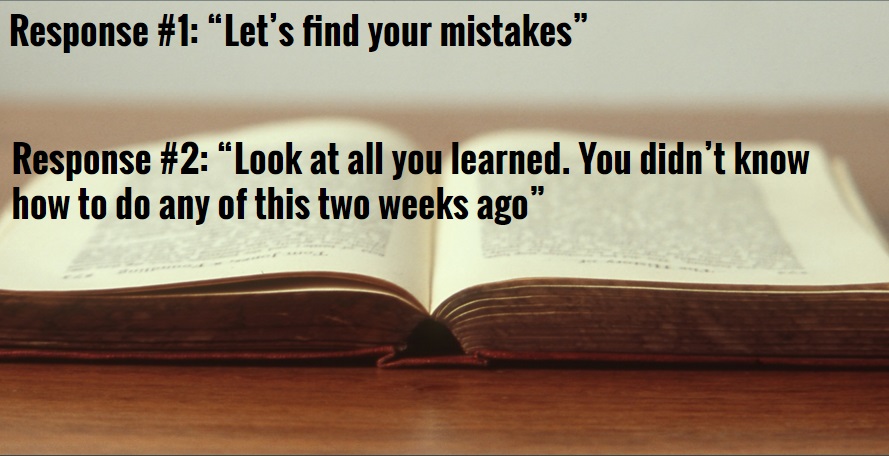
Response #1: Let’s find your mistakes.

I took the time to look over her test with her.  What we found was that she was very skilled in visualization and breaking down shapes into more manageable pieces.  She was persistent in solving difficult problems and took many approaches in order to find the solution.

On the contrary, her struggles were very small.  She forgot to use pi in a few problems and read too quickly, misreading the numbers given.  Her struggles and stressful B- assessment came down to a few silly errors.

Response #2: Look at all you learned.  You didn’t know how to do any of this two weeks ago!

Taking the time to point out all of the concepts she understood took 90 seconds out of my day, but did a world to show this student that her hard work did, in fact, pay off.

Future

Recently I read an article shared by a colleague, and it rewired the way I think about growth mindset.

 “It seems the growth mindset has run amok. Kids are being offered empty praise for just trying. Effort itself has become praise-worthy without the goal it was meant to unleash: learning.”

The article challenges the average proponent of growth mindset, forcing them to rethink the way in which growth mindset manifests itself in the language, curriculum, and assessments of their class.  After reading it, I boiled implementing growth mindset into these four questions:

1. What specific language do you use to encourage growth mindset?
-Do you value mistakes?
-Do you value struggle over speed?
-Share your growth mindset language with the hashtag #growthlanguage

2. How do we model the process for students?
-If we ask students to embrace mistake and overcome struggles we should probably being doing it too.  What does that look like in your classroom?

3. How do we create a system that allows for a growth mindset?
    -How can we value mistakes and struggle if we don’t give students a chance to fix them and learn form them?
-Telling kids they can succeed but not giving them the support or tools to get there is something we probably do but need to change.

4. How can you demonstrate to students they are learning and growing?
    – Think about the student that says, “I hate school.”  How can you show them that all of the work they are doing is paying off?  I’m not talking about the gradebook or even pre-test/ post test.  How can we connect their struggles and effort to their success, however small it may be?


These are the questions I hope to answer moving forward.  Being mindful of them and working toward progress is where I’m at now.  I’m sure crashing and burning is still in my future, and, yes, I still will have some students that care and some that don’t, but I’ve noticed an overall change in my kids.  They’re growing; they’re working hard and persisting through struggles more than they did at the start of the year.  I’ll count that as a win.

Starting the School Year with Struggle and Collaboration

snoopy
http://cppsendofsummerparty.weebly.com/

You know that feeling – the summer is quickly winding down; the peaceful time with family and friends is replaced with the anxiety and uneasiness of a new school year.  Perhaps you’re not worrying because you have a routine; you have a go-to plan that has worked for years. Perhaps you do not worry because the start of the school year is as simple as assigning seats, a quick welcome, and going over the syllabus.

Being the fourth year of my teaching career, I have not really developed any tried and true methods, and I am not a big fan of imposing rules and expectations on the kids right off the bat.  Instead, my planning stemmed from something Dan Meyer said to me when I asked him how to get a group of kids so engaged and thinking critically:

The way your students think and talk about math on the first day of school doesn’t imply they will need to think and talk about it the same way in April or May.

Just like the growth mindset for individuals, a classroom and a group of students as an entity can be developed over time.  Recognizing the ideal class will never be handed to me on the first day of school I decided to ask the question – how do I help students take the first step?


ACTIVITY ONE –  How do I get students to collaborate about math in a meaningful way?

  1. Make sure you have students sitting in groups.  If you want students to collaborate you need a environment conducive to doing so.


2. Hand out a piece of paper to each student and tell them:

Today we are going to practice being artists!  How many of you feel like you are decent artists?” (take a show of hands)

How many of you feel like you’re definitely not artists?” (again a show of hands)

I need you to get out a pencil.  In a second I am going to put up the picture that I need you to draw” (don’t start with the picture on the screen because their reaction is hilarious when you show them).

You will spend three minutes drawing an image to the best of your ability.  It does not need to be perfect, but I want you to do your very best

This is a perfect activity for the first day because they will still do almost anything you ask!  Mostly they’re confused why we are drawing in math class.


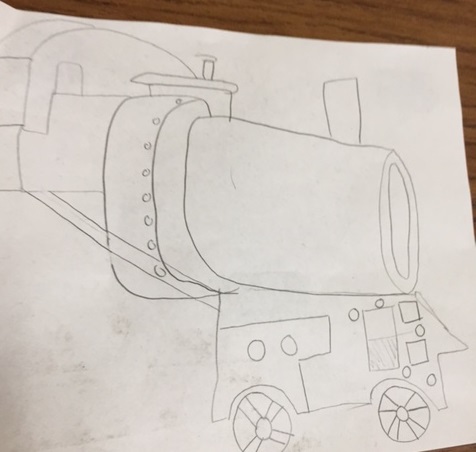
3. Throw this image on your screen and tell them “Ready, go!”

  • Here’s a link to the larger image: Train Pictrain
  • There most likely will be an uproar because many of the students are having a panic attack.  Just remind them “I won’t let you fail.  I  just want you to do your best”


4. Give students students about a minute to draw, circling the room saying “I’m seeing some awesome works!  Keep it up!”  After a minute tell the kids to put down their pencils.I want you to grab your paper with your left hand [pause and demonstrate it for the kids] and pass it to the person on your left.  You should now have a new image in front of you.  I want you to keep going where the last person left off. Go!”

  • An interesting thing happens at this point.  The students have met their first struggle of the year.  They are forced to deal with someone else’s work – maybe good, maybe bad.  Either way, they are forced to look at a situation in sometimes a very different way than they approached it.  Doesn’t this sound exactly like what we want from students in a classroom?
  • After the initial struggle of trying to figure out someone else’s drawing you see students…collaborating!  They are asking the person before them how they started or sometimes what they were looking at.  One student grabbed their partner’s paper and started drawing but after a few seconds the partner reached over and rotated the paper 180 degrees saying “you should probably look at it this way”.  


5. Repeat this process giving students 45 – 60 seconds to draw before switching again.

  • I had groups of four so I gave students about 60 seconds, then 45, 45, and 45.  Not only do you end up with collaboration; students are able to flex their creativity as well!


Example Train DrawingExample TrainExample Student Train 2         

6. After the activity take the time to reflect on the important lessons.

A.  Did you notice…

  •    Point out the use of collaboration to make sense of the first person’s drawing.
  •    Tell them about other observations you made while they were working.

B. Why did that happen?

  • Ask the students why they felt the need to collaborate.

C. Does it happen in life or does it happen at home?

  • Ask students to tie the drawing activity to life.  Make sure you give them time to think, and let them come up with the answers.

D. How can we use this?

  • What does this look like in a classroom?  What is the value of collaboration?


ACTIVITY TWO

  1. Have students flip the page over and assign partners.  Students need to choose who is person A and who is person B.


2. Explain to them they will only need one pencil and one piece of paper.  Person A will be in charge of the pencil and person B will be in charge of the paper.

  • Tell the students:

Person A, your task is easy; all you are allowed to do is put the pencil to the page or lift it up.  Person B, you will be in charge of the telling them when to lift the pencil up and when to put it down.  Person B, you are also in charge of the paper.  You will be drawing an image by moving the paper below the pencil.  In a second, I am going to tell person B what you will be drawing; person A, I’m going to ask you to close your eyes.

  • Like anytime you give directions, you probably want to go through these directions two more times so everyone is on the same page.  If you have the time to model it for the students, that usually helps too.


3. Tell person A to cover their eyes, then on the board write the word – CAR – then immediately erase it.  Give students 2 or 3 minutes to complete the task.

Drawing of poorly sketched car
If you’re lucky you’ll get some sweet pics that look something like this.
  • Some students struggle with the idea that they are completely in charge (person B) and some students are frustrated by not having any idea of what the end result will be (person A).  What happens though, is a cooperation between the two partners to overcome a challenge.  By keeping the image simple and fairly vague it impossible for students to fail.  Use this activity to talk with students about overcoming challenges and developing strategies.  In fact, laugh will the students about their struggles.


4. After the activity take the time to reflect on the important lessons.

A.  Did you notice…
B. Why did that happen?
C. Does it happen in life or does it happen at home?
D. How can we use this?


These activities did more to set up a positive and collaborative environment than I could have hoped.  My honors classes use each other as resources to the point where I feel like I’m not needed!  It allows me to rethink how I am utilized in the classroom and focus more time on students that need more one on one help.  My regular classes for the first time are actually talking!  I’ve always preached collaboration with little to no success, but now I have students comparing answers and going to each other for help.  By no means is it the perfect environment, but like Dan Meyer said, the students in October still have six months to get there.

These ideas are not completely my own.  Each of them were developed from the Link Crew mentality – one that encourages learning through activities, then having discussion about how the activity ties to real life.  This is the book that contained these ideas.  I encourage you to buy it if you’re looking for ways to spice up your classroom.

Rewiring the Teacher Brain for Growth Mindset

Teaching growth mindset is not as much “showing students how” as it is a “changing the way we talk about what we already do”.  If we are able to talk about learning differently, it becomes embedded in daily routines.  Here are a few subtle changes I made to my syllabus this year.

Old syllabus

EXTRA HELP:

Get it when you need it!!   After school!  Before school!  During class work time!  From your friends!  From me!  From other teachers!  From parents!  From older siblings!  From a tutor!  From the internet! From Khan Academy! The possibilities are endless – YOU just need to make the effort.  Just like life, math doesn’t come easy for most of us – you have to work at it!

New syllabus

GROWTH MINDSET:

Work hard and ask for help when you need it. After school or before school! During class work time! Browse the internet! The possibilities are endless – YOU just need to make the effort. Just like life, math doesn’t come easy for most of us – math is not about speed, it is about the struggle!

As you can notice, very little changed.  Instead of implying getting help is an extra part of learning (making kids feel dumb if they need to get help), I express that hard work is part of the learning process and that asking for help is the norm.  I like how the original paragraph emphasizes effort, but I tried to take it further by emphasizing that struggling is okay.  If students are content with solving problems quickly we are robbing them of real learning.

I challenge you to choose your words carefully when creating documents and especially as you are talking with students.  It is not easy at first, but soon enough it becomes a normal way to talk about learning.

Building Grit – Being Proactive

It is the start of another school year and that means in a month the calm of the first few weeks will be overshadowed by the insanity of contacting parents, getting kids caught up/ back on track, and never-ending lesson planning.  Last year I chose to be proactive in hopes that I could at least help kids from falling behind early in the school year.
Here’s what I did.

1.) Ask around to see if it was possible to receive an organized list of my students’ math grade from the previous year.

  • This is important because otherwise I would have had to individually look up each and every student one by one; always find the easiest way

2.) Find all students that ended the previous course with a D or failed the course and are repeating

  • Last year I chose to find students with and C, D, or F.  This year’s students are coming in with more D’s, so I’m not worrying about the C’s to keep the process manageable.  Choose what works best for you.

3.) Email parents asking them to meet the first week of school to get to know their student’s strengths, weakness, and to set goals.

  • Below is the message that I sent to parents:


“Hi there!

My name is Casey Ulrich and I will be your daughter/ son’s math teacher this year for Algebra 2. I am excited to start the new year and know that it will be a great one!

I am reaching out to you because looking at last year’s math grades your daughter/ son seemed to struggle with Geometry. Algebra 2 builds on many of the concepts that are presented in geometry and I want to make sure this school year gets kicked off with a positive start.

I would love to set up a meeting with you and your student to get to know some of the strategies that help them learn best and to set a goal for the semester. I am available any day after school this week Tuesday, Wednesday, and Thursday as well as most days the following week. Please let me know if you would like to set up a conference and what times would work for you!

I look forward to the chance to meet you and learn all about your awesome kid.”


It turned out to be super effective in helping to understand incoming students.  Knowing a little bit more about them at the start of the year as well as establishing communication with parents led to great relationships and a positive learning atmosphere.  What I saw in these students was an increased level of grit.  They were less afraid to ask questions and often times were the students I spent the most time helping after school.  It allowed them to see that struggles are a part of learning and developing strategies to improve led to more learning. (what a novel idea)

No data to prove that this was a direct success, but I can vouch that it passes the gut check (certainly feels like it helped).  Not all parents responded and not all students that showed up changed their learning habits drastically, but it was conversation that laid out the fact that I believed that they could learn.  Hearing that from the teacher the first week can go a long way.

What else do you do to foster grit at the start of the year?

Creating a District Culture of Sharing

Teachers are awesome people.

They care about kids.  They force students to challenge themselves.  They make learners question the world around them, and when needed, they listen.  Yes, I am a teacher, but the stories from other educators are what inspire me.

There is one weakness of teachers that I would like to point out but hope to improve: sharing.  For all of the awesome things that teachers do in the classroom we are afraid to have someone else look at our work as if somehow the miracles we perform on a daily basis aren’t up to someone else’s standards.

Here are three ways I plan on trying to start building a culture of sharing.


1. Make time to watch other teachers teach.

How?

I’ve been saying that I want to this for years now, but this year I’m going to make it happen.  It is easy to make excuses.

-I’m a young teacher; I don’t have time for it.
-My curriculum changed; I don’t have time for it.
-I’ve got parents to contact and I’m behind in grades; I don’t have time for it.
-…you get the picture.

We make so many excuses that we don’t have time…and I get it, I make those same excuses.  So here’s what I’m going to do (hopefully blogging this will help hold me accountable):

Make a list of people that I would like to see teach.  Ask them if I could come watch them teach. Schedule a specific day and time to watch them teach and add it to my calendar.  Things come up, yes, but reschedule and make it happen.  Think of it as a meeting, but this meeting you will actually grow as an educator.

Why?

I will get a better understanding of what my students go through in an average school day.  I will be able to see how other teachers question students, encourage students, and hold them accountable for their learning.  To think that I know all there is about teaching or that my way is the best is simply foolish.  How can I grow unless I am introduced to what else is out there?

I can create a better relationship with my peers.  If they are comfortable with talking about it, I can ask them their rationale behind decisions.  Did you notice you did this?  Why did you make that decision?  It creates an opportunity for educators to be reflective while having a meaningful conversation about improving learning for students.


2. Create a hashtag your district can use to collaborate and share resources or ideas.

twitter

George Couros is a boss educator, and I had the pleasure of listening to him speak at ISTE 2015. One of the many moving quotes was simple:

“Isolation is now a choice educators make”

Often we as teachers hide away in classrooms, overwhelmed with the tasks that lay before us, but twitter presents a new form of learning, connecting, and growing as professional educators.

How?

I plan on writing a more detailed layout of how this has worked in my district, but here’s the general roll out of what I have done in regards to creating a district hashtag.

1. Find a hashtag that is short and not already used by others.

2. Find other innovators and tell them about your idea.  Keep this group very small for the first few weeks to generate content and help determine what type of content will be shared.

3. After three to four weeks try to expand your group to other early innovators.

4. Try to get administration on board – show them or, even better, have them try it!

5. Ask to share the idea with the rest of the staff.  Take time during the next staff meeting to share your thoughts.

6. See if you can lead training sessions for interested staff members.

Why?

In this day and age we have access to all of the info in the world, but more importantly, we have access to one another (another Couros quote).  In the crazy routine of teaching there are days we do not have a moment to eat lunch or even go to the bathroom.  Getting out of our room to have a conversation seems daunting, but taking a minute to tweet one awesome thing that happened each day allows us as educators to connect, have conversations, and share learning at pace that matches our lifestyle.


3. Create a Tagboard to share experiences in the classroom, at sporting events, and in the community.

vision

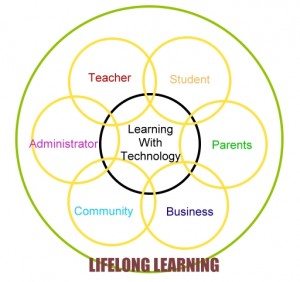
Districts are made up of much more than teachers.  To fully create a culture of sharing, students, parents, administrators, coaches, and community members also need to be a part of the process. Many of these members are already producing content whether it is on facebook, twitter, or instagram. Tagboard allows all of these mediums to be collected and shared in one place.

                                                How It Works

Anytime someone uses a hashtag on facebook, twitter, or instagram it is displayed on a tagboard devoted to that tag.  For example, check out the tagboard for #badgers.  As you scroll, you can see that most of the content came from twitter and instagram, but there are occasional facebook posts that appear as well.  All that is needed is a simple tag you can use for your community and spread the word to start sharing.

                                   Why?

Taken from https://ggulibrary.wordpress.com/2014/04/18/featured-database-statista/

Facebook, twitter, and instagram all tend to be favored by different demographics.  From my experience, many parents have and use facebook.  They love to post pictures of their daughter/ son’s sporting events or club outings.  Some parents, teachers, and students prefer to use twitter to share experiences.  For me, it is the preferred method to share content.  Lastly, the preferred form of social media among students is instagram.  They already throw a million hashtags on their pictures; why not add one more that will share a classroom experience/ basketball game/ musical/ band performance/you-name-it with others excited to be part of the community?  Could you imagine a district where student learning and success was displayed openly and everyone was welcome to be part of that community?


I plan on writing more about my experiences as the next school year begins, but I challenge you to find ways to expand your comfort zone and push others around you to share more of what you do on a daily basis.  Teachers are awesome people – its time to show off.  Own your greatness; everyone loves learning.

What Is The Point Of All This Data?

http://spotfire.tibco.com/blog/?p=10941

“The greatest value of a picture is when it forces us to notice what we never expected to see” – – John W. Tukey. Exploratory Data Analysis. 1977.


Data is everywhere.  Data is used in sales, marketing, politics, and now more than ever education.  Information helps to inform businesses and mobile apps, and helps to shape the world around you.  The card you scan or number you enter at the grocery store gives the store a snapshot of your spending habits.  Those things you “like” on facebook dictate the ads that you see when scrolling through your news feed.  There is plenty of data floating around in the world, but only the best organizations understand how to interpret it into something meaningful.

21st education understands that data collection is important, but I believe that interpreting is still in its infancy.  School districts cannot afford statisticians and often we are left with spreadsheets of data that tie only numbers to students. Ugh, spreadsheets.  What – a – headache.  Way too much time is spent figuring out what number goes with what student or whether that number means growth, mean score, percentile, or whatever.  Either way you put it, interpreting the data is HARD.

What is the point of data in schools?

1. Large amounts of collected data should help see pockets of strengths and weakness in a building to make celebrations and next steps more clear.

When a company finds that some employees are thriving and others are struggling two questions arise.  What makes the thriving members so great, and what support do the struggling members need?  Without proper visual displays of data, it becomes difficult to determine the thriving members as well as those in need of support.  This is a problem and impedes potential progress for schools.

2. Smaller, more individualized data, should help paint a detailed picture of each student.

Between the MAP, ACT, and ASPIRE kids are absolutely tested out.  Throw in literacy assessments, math tests, and every other academic grade students receive I sometimes wonder the actual ratio of learning to assessing.  Every student deserves their information to be collected and visually organized in a matter that can help them and others make meaningful connections about their learning.

Possible SolutionsMAP

While attending ISTE 2015 I sat in on a session led by Sujoy Chaudhuri and Shabbi Luthra.  Their approach to data was interesting.  Instead of looking at MAP scores through a spreadsheet, they created visual displays that broke the scores into smaller strands and organized students visually depending on their strength or weakness within a set of skills.

FullSizeRender(1)
Instead of deciding which teaching standards needed to be emphasized and hoping it would work out, they tracked and compared artifacts as they related to ISTE standards, state teaching standards, and Marzano’s effective teaching strategies.  They were able to visually see areas of weakness, emphasize the work, and within a year a visual improvement was noticed.  It is amazing stuff when the data is presented so clearly.

Things to Consider

Regardless of the data collected it is up to you to determine what patterns are important.  As said by Blaise Pascal, “We are more easily persuaded by the reasons we ourselves discover than by those which are given to us by others.” We were left with these guidelines when interpreting data:

Wonderings – What do you find yourself wondering about as you look through the data? Wonder, discuss, uncover but don’t jump to conclusions

Observations – Look for patterns. What are you seeing? What are the outliers? What are the surprises?

Connections – Start to connect the data with your background experiences with a student, a class, a grade level, a school, a curriculum, other variables and other data

Questions – What are the questions you find you need to think about, talk about, act upon?


Whether you are a teacher or administrator it is important to find ways to produce and interpret visual representations of data rather than spreadsheets and lists.  Too often we find what want to see in spreadsheets and use data to justify our own rationale.  We now educate in the day and age where data rules.  It is time we find an effective way to use it and help propel us forward.  If we don’t, I’m afraid we will continue to spin our gears and not find meaningful progress.

If your school or district uses data in an interesting and meaningful way will you please share?


Where is our advertising?

The other day I was watching TV (which is a rarity these days) and this commercial came on: I Knew One Day. Watching it gives you a sense of pride, a sense of being part of something special and bigger than yourself.  You can have your opinions about politics and the military, but at that moment I was a little let down that I didn’t make the choice to be part of the amazing Air Force team.  Whoever’s job it was to make that pitch sold me.  Well done.

A few days after watching that commercial I was having a conversation with a student and, being a high school teacher, the inevitable question “what’s your plan for after high school?” came up.  She smiled and said, “Well, I was thinking about being a teacher, but my mom told me that it would be a bad idea”.  Dagger – to – my – heart.

I can make the argument that the mom is right.  Going into teaching is a bad idea.

  •  If you are someone who wants to teach the same way it has always been taught, teaching is not for you
  • If you are someone who thinks teaching is a simple way to work with kids and get paid, teaching is not for you
  • If you are someone who enjoys working 40 hour weeks, teaching is not for you
  • If you are someone who thinks teaching would be great because you get summers off, teaching is not for you
  • If you are someone who thinks working most jobs is too taxing and you were always good at school so why not, teaching is not for you.

I can also make the argument that mom is wrong. Going into teaching is an amazing idea.

  • If you are creative, teaching is for you.
  • If you are passionate about – quite literally – changing the world, teaching is for you.
  • If you are someone that loves chasing dreams with endless potential, teaching is for you.
  • If you are someone that embraces failure and the growth that comes from it, teaching is for you.
  • If you are someone that loves to learn from others, be challenged by others, be stressed by others, all for the sake of becoming a better human being, teaching is for you.
  • If you are someone who loves ever changing technology, teaching is for you.
  • If you are a leader, teaching is for you.

Thinking about the Air Force commercial, I am upset that education doesn’t have an advertising department – no budget to spread the word.  I can envision a similar commercial where we talk about education and all the different parts that make it up.  Teaching is just a sliver of the slow moving mammoth that is education.

-Teaching       – Psychology      – Social Work      – Technology      – Architecture     – Programming        -Advertising    – Business Management           -Administration       – Advocating      -Policy Making
– Custodians   – Cooks              – Media               – Coaching          – Students          -Innovators

My dream is for young people to be excited about joining education.  If we turn off all the best and brightest we will only be left with those that have no where else to go.  Let’s work together to get the top young minds to work in education or at least see it as the important building block to society that it is.  The question that needs answering is, how do we communicate this message to others and shift the growing paradigm that going into teaching is a “bad idea” to one that is “an amazing idea”?

Your thoughts and comments are appreciated.